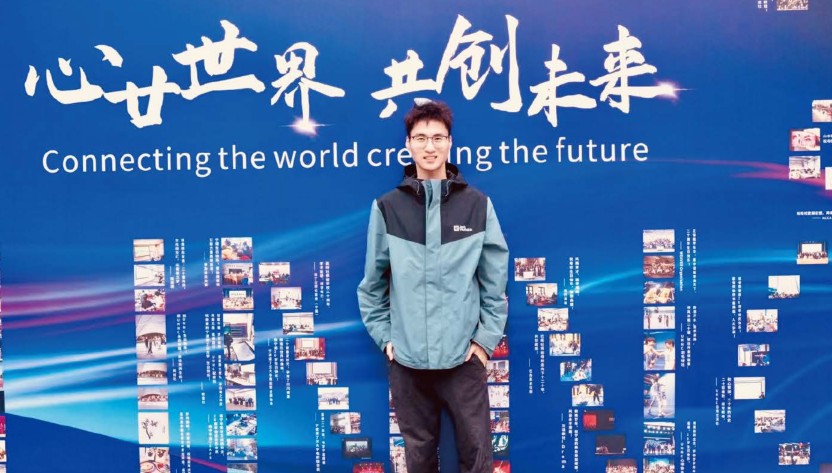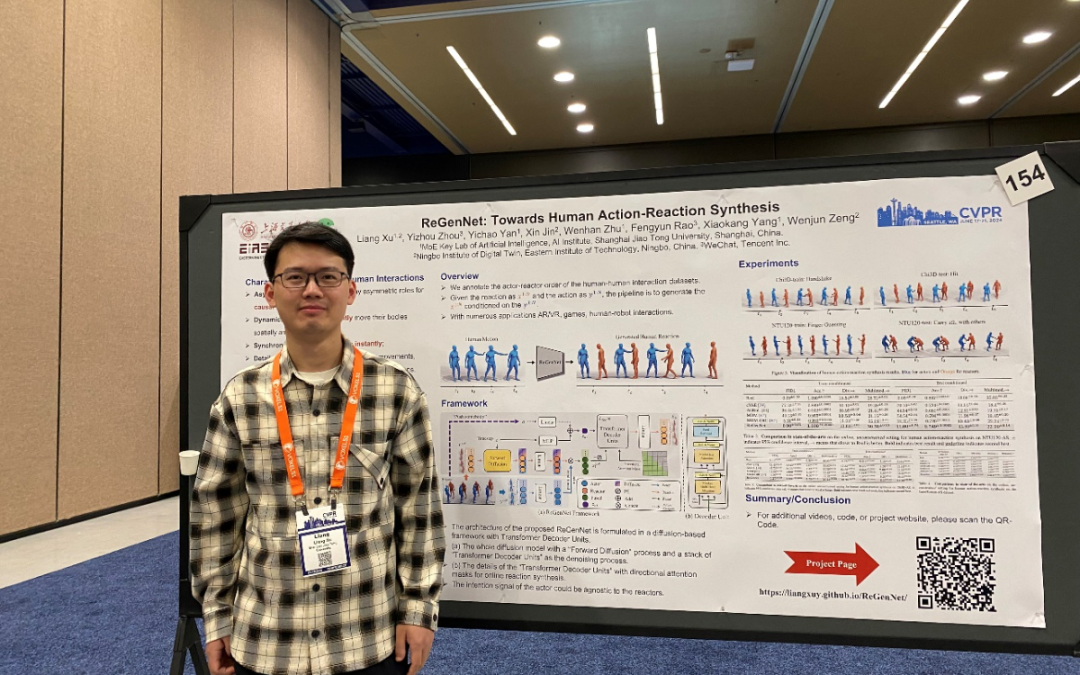

Qinglong Cao is a Ph.D. student in a jointly-trained program between Shanghai Jiao Tong University (SJTU) and the Eastern Institute of Technology, Ningbo (EIT), enrolled in 2022 in Computer Science. His research focuses on scientific visual learning, with notable work in image semantic segmentation, multimodal feature learning, and fluid dynamic modeling.
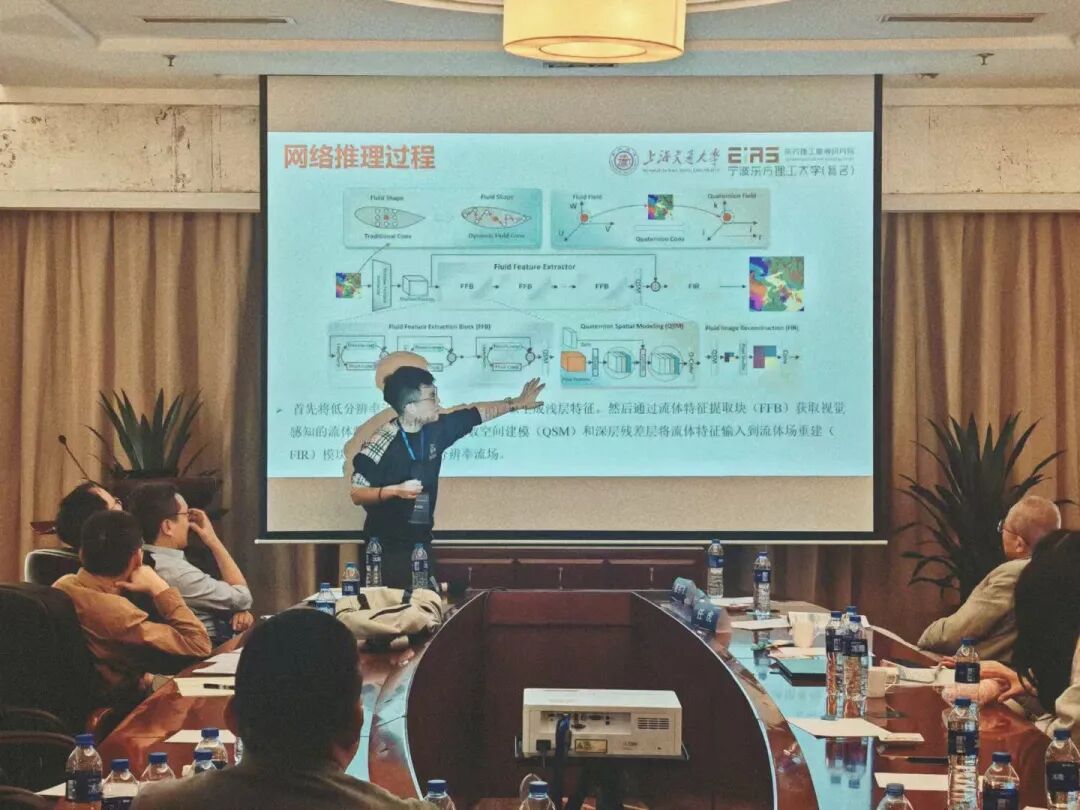
Qinglong Cao attended the First National Conference on Intelligent Fluid Mechanics.
During his master’s studies, Qinglong Cao published two SCI-indexed papers and one CCF-A paper, demonstrating strong research potential.
If there are milestones in a doctoral journey, the first research project and the first published paper are surely among the most significant. To Qinglong Cao, pursuing a Ph.D. is like climbing a mountain—completing those two demanding “firsts” brings a moment of clarity and accomplishment, a journey both challenging and rewarding.
True to his name, which suggests clarity and vitality, Qinglong Cao is energetic and sharp-minded. Open to new experiences, two years ago he did not hesitate to become a pioneer in a new program.
He admits that what drew him to the joint-training program between SJTU and EIT was its novelty: a new platform, a new principal investigator, and new research directions.
As it turned out, his bet paid off—everything proved even more interesting than he had imagined.
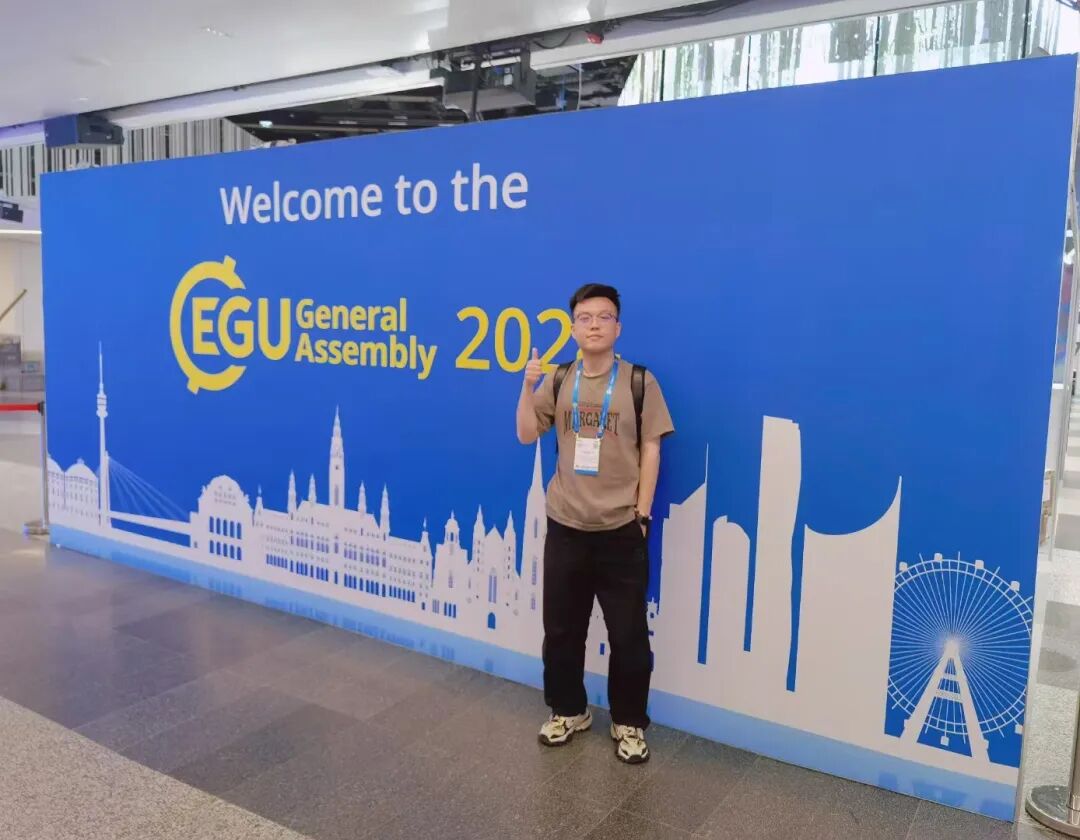
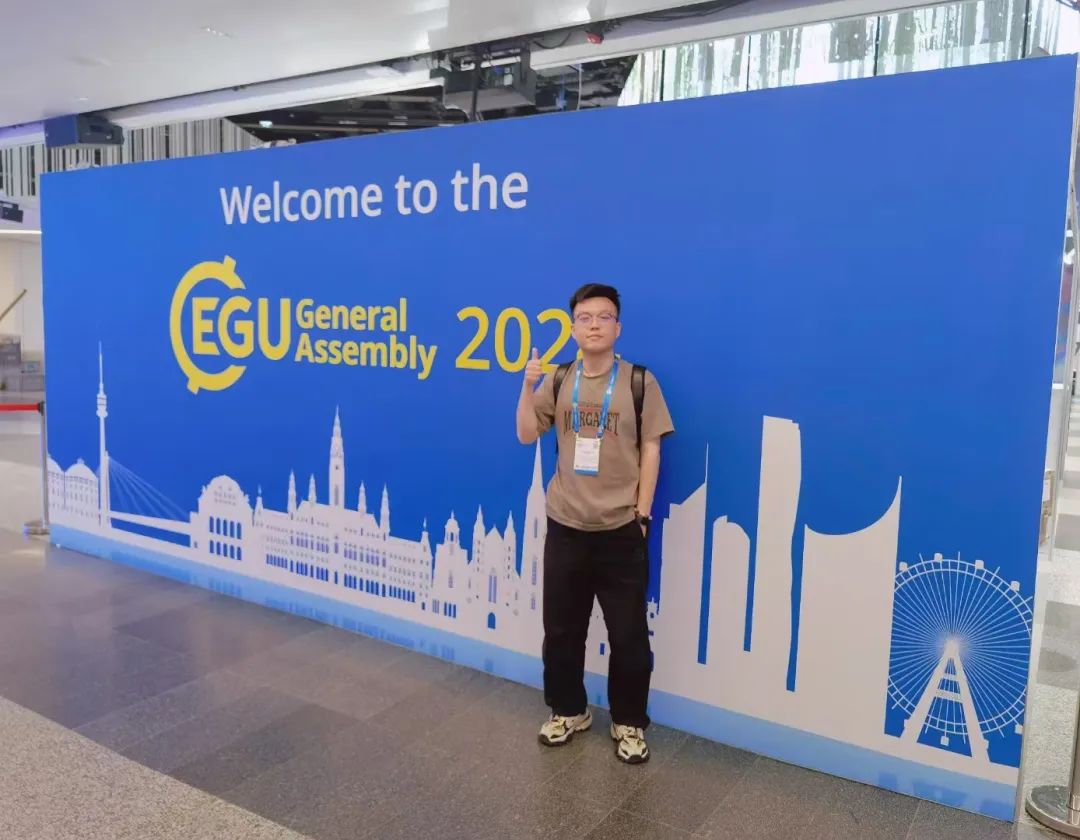
Qinglong Cao participated in the European Geosciences Union General Assembly.
One of Cao’s doctoral advisors at EIT is Yuntian Chen, a 31-year-old assistant professor in the university’s engineering division. Affectionately called “young mentor Chen” by Qinglong Cao, Professor Yuntian Chen completed his undergraduate studies in Energy and Resources Engineering at Tsinghua University, along with a dual degree in Economics from Peking University. He earned his Ph.D. ahead of schedule from the College of Engineering at Peking University, graduating with honors. With over 50 published papers and 21 authorized patents, Professor Yuntian Chen brings both achievement and fresh perspective to his role.
One was becoming a principal investigator for the first time; the other was beginning his journey as a doctoral student. Together, these “firsts” sparked something distinctive.
Young mentors tend to be more open to new ideas, and Qinglong Cao notes that Professor Yuntian Chen has given him considerable freedom in choosing research directions, encouraging him to pursue pioneering work—such as applying traditional vision methods to scientific domains. Their relationship transcends the conventional “supervisor-student” dynamic. Communication is more immediate, often sparking creative exchanges. “We learn from each other,” Qinglong Cao says. “We explore together, break from tradition, and do research that is truly interesting.”
Today, deep learning AI technologies—especially large-scale models—heavily rely on massive datasets. Yet in fields like medicine, remote sensing, and mechanics, data can be scarce and costly to obtain. Qinglong Cao’s research focuses on leveraging AI techniques to advance visual learning under sample-limited conditions.
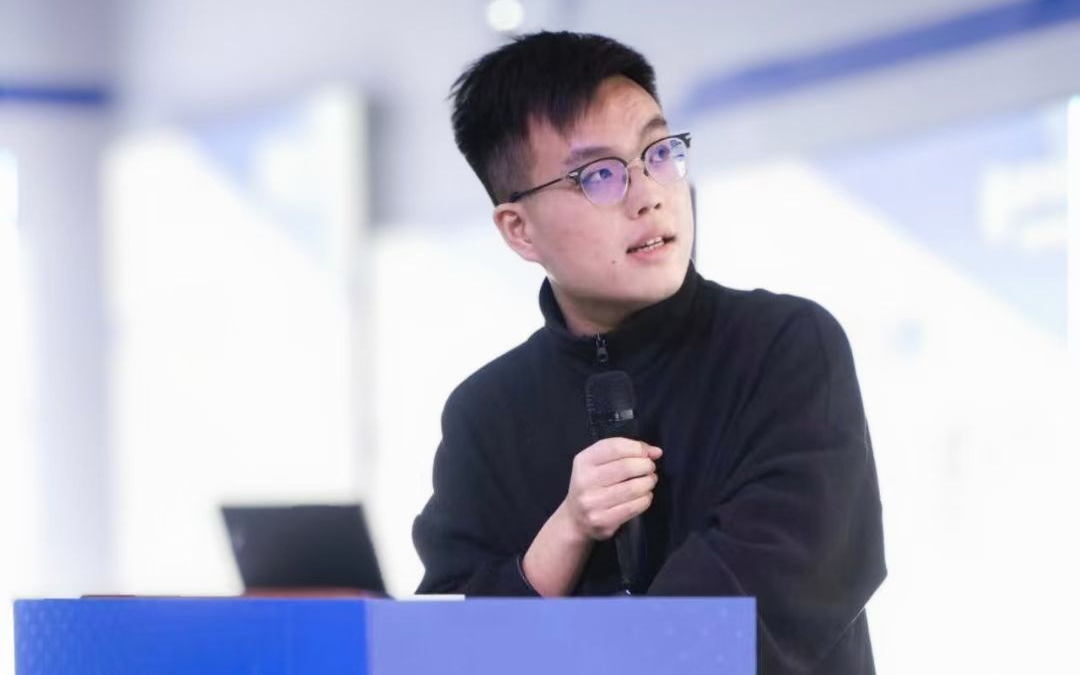
Cao Qinglong attended the Ningbo Youth Talent Conference.
Over the past two years, under Professor Yuntian Chen’s guidance, Qinglong Cao has achieved notable results in areas such as prompt learning with limited samples, few-shot learning, and flow field super-resolution. He has published multiple papers in top-tier international conferences like CVPR and AAAI, as well as in high-impact SCI journals including TCSVT, TGRS, PoF, and TNNLS. One of his works was recognized as a CVPR Highlight (top 2.8%).