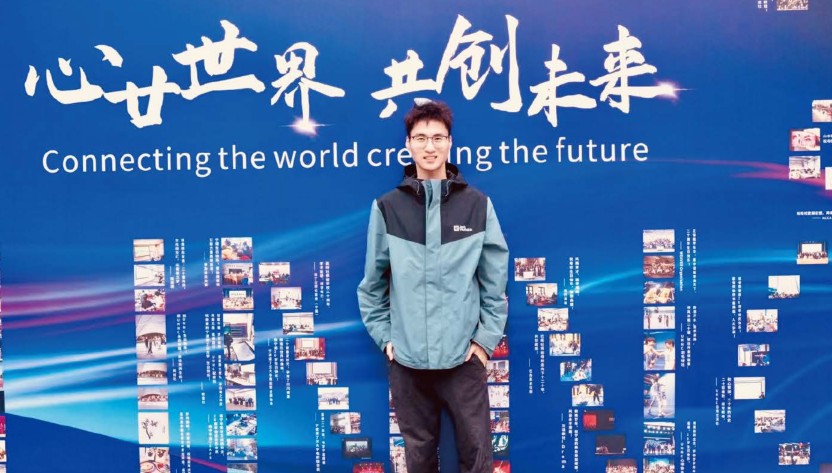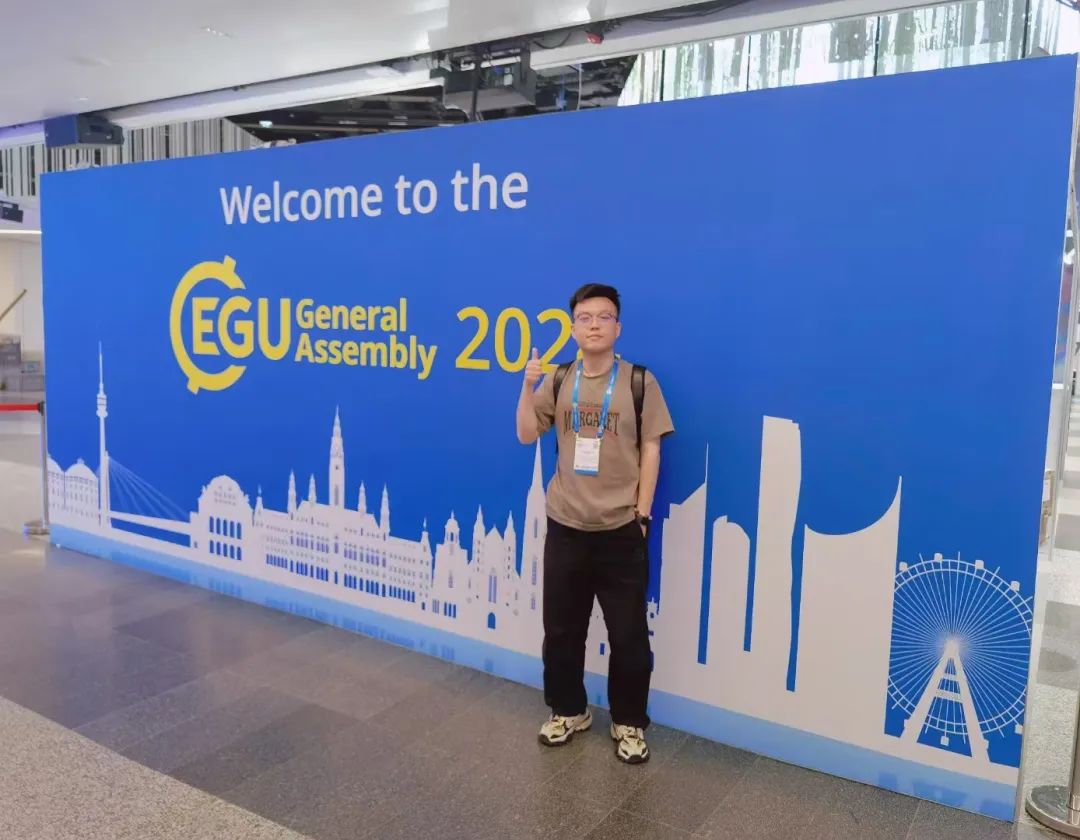

Liang Xu is a Ph.D. student in a jointly-trained program between Shanghai Jiao Tong University (SJTU) and the Eastern Institute of Technology Ningbo (EIT) (class of 2022). He completed his undergraduate studies at Nanjing University and earned a master’s degree from Shanghai Jiao Tong University. His research centers on computer vision, with a focus on human-centric action generation and human-environment interactions.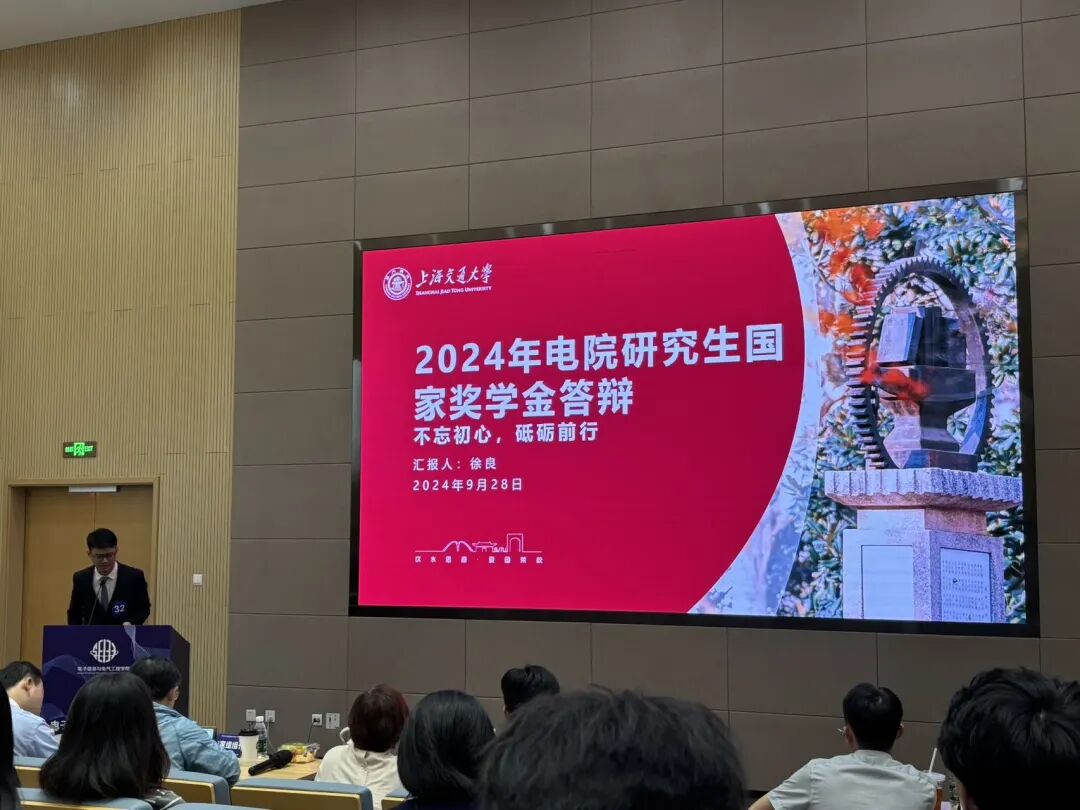
Xu Liang participated in the National Scholarship for Postgraduate defense presentation at the School of Electronic Information and Electrical Engineering, SJTU, in 2024.
Those who meet Liang Xu often describe him as composed and steadfast. His decision to pursue a Ph.D. grew from a natural inclination to delve deeply into complex questions, though he could not have foreseen how it would eventually align with what feels like a professional calling.
Unlike others, Liang Xu entered academia after substantial industry experience. While completing his master’s degree at SJTU, he interned at Microsoft Research Asia. He later joined SenseTime as a full-time researcher, where the routines of industry work prompted him to reconsider his long-term path.
For Liang Xu, a Ph.D. represents more than academic training—it cultivates a holistic set of capabilities. Beyond honing research methods and technical skills, it builds mental endurance and resilience, qualities essential to navigating high-pressure research environments and invaluable for a lifetime.
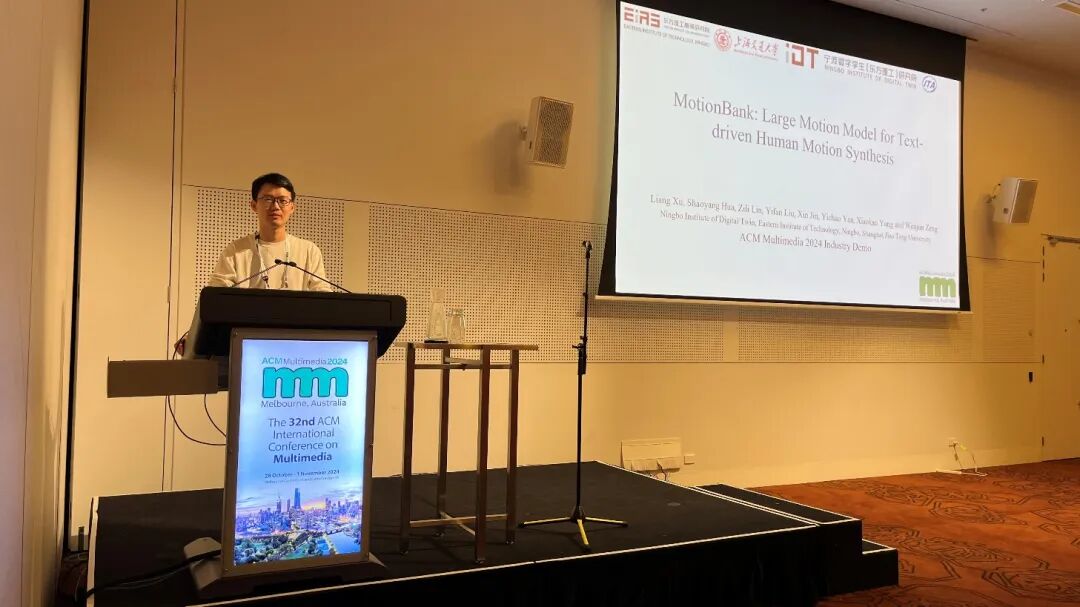
Liang Xu delivered an oral presentation at the ACM Multimedia conference.
When asked why he chose the joint Ph.D. program between SJTU and EIT, Xu Liang highlighted the influence of his former mentor, Professor Wenjun Zeng, now Vice President of EIT.
Professor Wenjun Zeng, previously a Sr. Principal Research Manager and member of the Senior Leadership Team at Microsoft Research Asia, was among the first full-time faculty to join EIT and plays a key role in its academic development. As both a mentor and a friend, Professor Zeng has provided Liang Xu with lasting insight—both intellectual and personal. “My trust in Professor Wenjun Zeng made the choice clear,” Liang Xu noted.
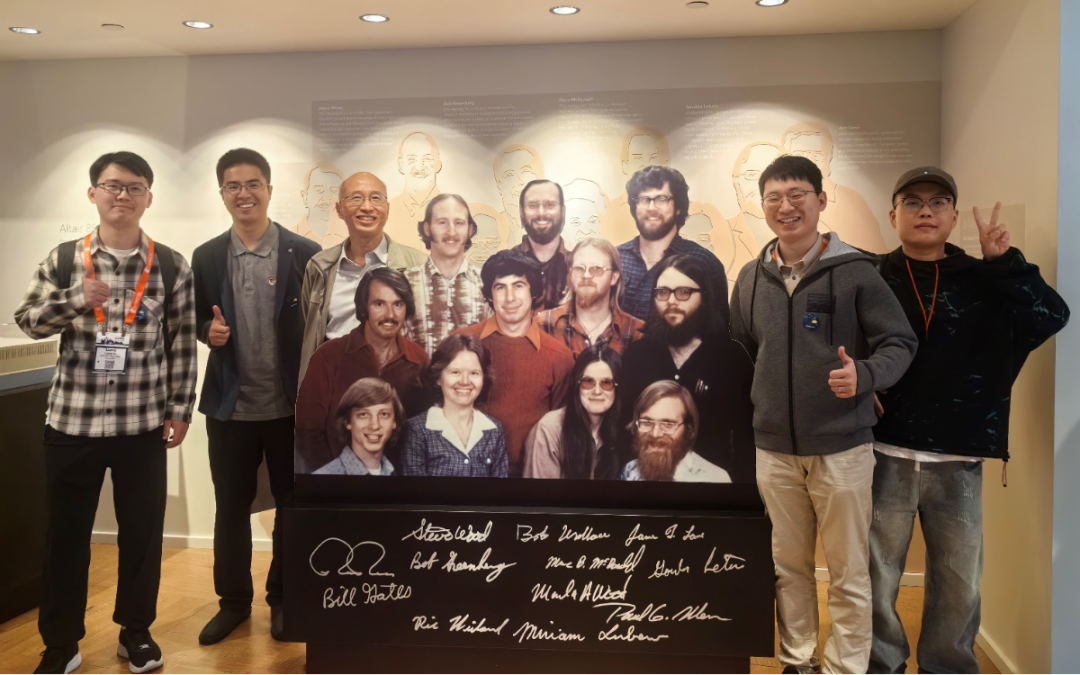
During CVPR 2024, Liang Xu (first left) and Qinglong Cao (first right) visited Microsoft’s headquarters in Seattle alongside their advisors, Professor Wenjun Zeng (third left) and Assistant Professor Yuntian Chen (second right).
The jointly-trained program combines the academic breadth and student community of SJTU with the advanced computational resources and research funding offered by EIT. Liang Xu considers the dual structure instrumental to his progress, noting that each institution brings complementary strengths essential to his work.
Xu Liang’s research focuses on computer vision, specifically the understanding and generation of human-centric actions and interactions. Specifically, it involves modeling human motion and exploring how people interact with their surroundings.
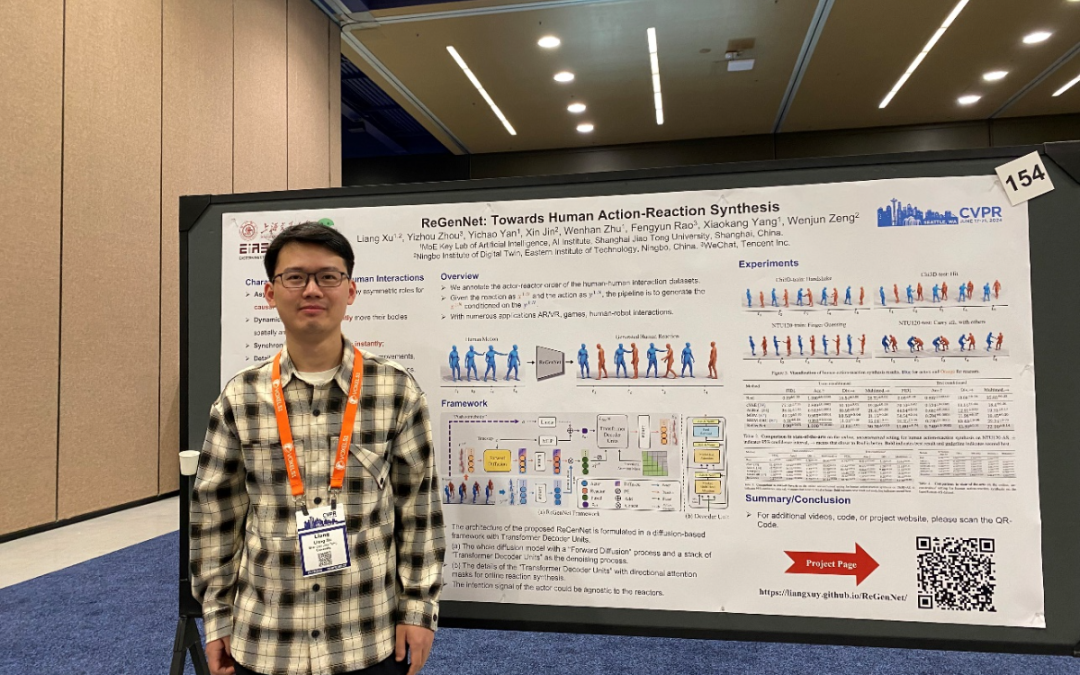
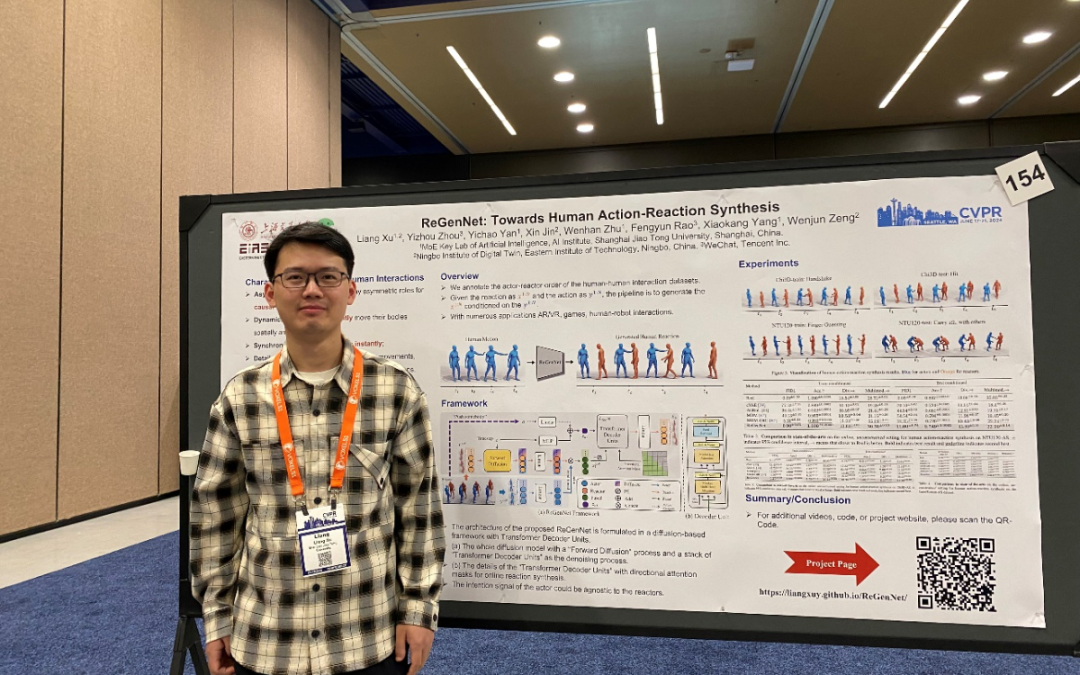
At CVPR 2024, Xu Liang presented a poster on his recent work.
To date, he has authored or co-authored papers at leading conferences and journals, including CVPR, ICCV, ECCV, TMM, and ICME, with six as first or co-first author. He holds three invention patents, has served as a reviewer for several machine learning and computer vision venues journals, and has accumulated over 700 citations. His contributions to open-source projects have received close to 600 stars.
As a member of the joint Ph.D. program’s inaugural cohort, Liang Xu offers this advice to those who follow:
Manage your time with purpose, define your direction, plan thoughtfully, and adapt to circumstances—all while maintaining an honest assessment of your own progress and limits.
Now in his third year, Liang Xu acknowledges that pressure and uncertainty remain part of daily life. “I may not be naturally optimistic,” he reflects, “but I strive to be resilient.” Facing an ever-growing list of tasks, he has learned to balance ambition with self-compassion—to acknowledge what has been done while focusing on what can be done next. “In many ways,” he adds, “that is what building resilience is all about.”